


Halloween in Portugal: Traditions and All Saints Day Celebrations
Halloween exists in Portugal, but it does not look exactly like Halloween in the United States or the United Kingdom. You will see costumes, pumpkin painting, costume parties, and spooky decorations, especially in bigger cities and among younger people. On November 1, Portugal marks All Saints' Day, a national holiday with deep Catholic and family traditions. Most people stop at the local cemetery to clean their family tombstone and place flowers at family members' graves. Rural towns attend Mass at church, then join a prayer procession to the cemetery to bless the deceased.
Halloween has grown in popularity with the rise of technology, TikTok, Facebook, and television shows. October 31 brings a growing taste for the eerie and playful. November 1 brings remembrance, flowers, cemetery visits, and Mass services. In some places, old Portuguese customs sit right beside imported Halloween fun, creating a celebration that feels both modern and local. When my son was younger, he celebrated Halloween- trick-or-treating- in February during Fat Tuesday. He wore a costume, celebrated at parades, and ate lots of festive foods.

Halloween is celebrated in Portugal, but on a smaller scale- Halloween in Portugal Traditions and All Saints Day Celebrations
Halloween has become more common in Portugal over the past few decades. Shops sell costumes, bakeries sell treats with ghosts or pumpkins, schools host themed activities, and bars organize costume nights. Lisbon hosts a large Bar Crawl. In larger cities such as Lisbon, Porto, Coimbra, and Faro, it is easy to find themed events around October 31.
Still, Halloween is not as central to Portuguese culture as it is in places where trick-or-treating has been a long-standing tradition. It is more of a fun seasonal event than a major family holiday. Many people enjoy it casually, while others see it as an imported celebration shaped by movies, TV, tourism, and global pop culture. Since Portuguese people value tradition and religion, Halloween isn't a serious holiday to celebrate. Halloween in Portugal: Traditions and All Saints' Day Celebrations continued.
The most common Halloween activities in Portugal include:
Costume parties
These are popular with students, young adults, and nightlife venues. Larger cities host Bar Crawls.
School celebrations
Children wear costumes, make crafts, or learn Halloween vocabulary in English classes.
Decorated shops and restaurants
Pumpkins, cobwebs, skeletons, and witches often appear in commercial areas.
Small trick-or-treat outings
This happens in some neighborhoods, but it is not universal. Farmers in smaller towns gift out fruit to young children.
Horror movie nights
Cinemas, streaming choices, and home gatherings often lean into scary films.
Top Halloween Events and Activities
Bloom x Monkey Project (Lisbon):
Date & Time: October 31, 4:00 PM – November 1, 4:00 AM
Venue: Pátio da Galé (Praça do Comércio, Lisbon)
Description: Large-scale electronic music and a headline Halloween production right on the riverfront.
Cost: Tickets required (check local vendor listings). [1]
Halloween Party Boat (Porto):
Date & Time: October 31, 10:00 PM (2-hour duration)
Venue: Douro River departures, Porto
Description: Costume cruise passing Porto's six bridges with an on-board DJ and welcome drinks (Gin/Port tonic or beer).
Sintra Ghost Story Night Tours:
Local Traditions & Context
The Weekend Schedule: Because October 31 lands on a Saturday, celebrations stretch across the entire weekend before All Saints' Day (Dia de Todos-os-Santos) on Sunday, November 1.
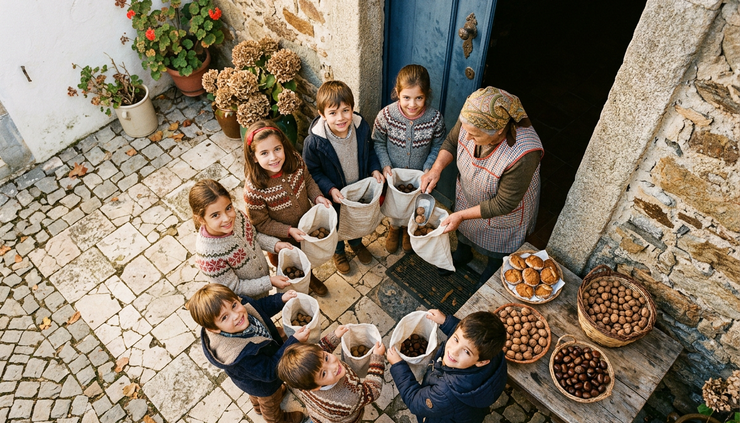
Pão-por-Deus: On the morning of November 1, children traditionally knock on doors to ask for "Pão-por-Deus" (bread or sweets), a historical custom parallel to trick-or-treating. My husband celebrated this in January
Cemeteries: Families spend the early days of November visiting, cleaning, and placing chrysanthemums on loved ones' graves.
If you are planning your trip, tell me which city or region you will be visiting so I can provide more specific local restaurant or event recommendations.
The result is a version of Halloween that feels recognizable, but lighter. It is festive, playful, and spooky, yet it rarely shuts down daily life the way Carnival or Christmas traditions do. Religion is a big part of Portuguese life, so locals focus more on religiously based traditions.
Portuguese folklore adds a local kind of fear
One of the most interesting parts of Halloween in Portugal is how it can blend with local legends. Portugal has a rich world of folk tales, supernatural beings, warnings, curses, and village stories.
The lobisomem, or werewolf, is a prime example. Like werewolf legends elsewhere in Europe, stories of the lobisomem often involve transformation, isolation, fear of the unknown, and strange events linked to night. In some versions of Portuguese folklore, the curse of becoming a werewolf is tied to family order, fate, or punishment. These tales vary by region, but they share a strong sense of mystery. Unlike classic European werewolves that strictly resemble wolves, a lobisomem in Brazilian folklore takes the form of a hybrid between a dog and farm animals like pigs, donkeys, or bulls, with dark fur, red eyes, and a foul smell.
Then there is the duende, a small, mischievous creature often associated with forests, hidden places, and playing tricks. In some stories, a duende may lure children away or confuse travelers. These figures are not always purely evil, but they are unsettling because they live at the edge of the known world. They belong to the woods, shadows, and places where common sense starts to fail. Stories about the duende can scare younger children.

The lobisomem and duende make Halloween feel less imported
Imported Halloween symbols are easy to identify, like jack-o’-lanterns, plastic skeletons, black witch hats, stringy cobwebs, and orange-and-black decorations. They are fun, but they are not specifically Portuguese. Halloween has become increasingly commercialized in the US. Adult costumes can cost more than $50. Some homeowners can spend hundreds of dollars on candy to distribute to local trick-or-treaters.
Folklore changes that. A Halloween event inspired by the lobisomem, the duende, or other local legends feels rooted in Portuguese imagination. It makes the celebration less like a copy of American Halloween and more like a meeting point between outside influence and homegrown stories.
This can show up in simple ways:
A costume party theme based on Portuguese myths
A haunted walk through an old village or historic town center
Storytelling nights with local legends
Decorations that use forest creatures, wolves, candles, and rural imagery
Children’s activities that introduce folk tales in a playful way
Portugal’s older supernatural stories often feel quieter than modern horror. They rely less on jump scares and more on atmosphere. A lonely road. A forest path. A warning from an elder. A strange sound at night. That makes them a natural fit for Halloween.
November 1 gives the season its deeper meaning
The day after Halloween matters a great deal in Portugal. November 1 is All Saints' Day, known in Portuguese as Dia de Todos os Santos. It is a national holiday, which means schools, many businesses, and public offices close.
For many people, this day is not about recovering from Halloween parties. It is about remembering the dead and honoring the saints. The Catholic meaning of the day is the celebration of all saints, known and unknown. In practice, it is also closely tied to family remembrance.
Many Portuguese families visit cemeteries on or around November 1. They clean graves, leave fresh flowers, light candles, and spend quiet time remembering relatives who have died. Colorful Chrysanthemums are especially common in cemetery flower arrangements during this period. The local priest leads a procession and prayer, and locals pray along. It's a time to reflect on family memories and spend time with family members.
Churches may also hold special Missa, or Masses. For practicing Catholics, attending Mass can be an important part of the day. Even for those who are less religious, the custom of visiting graves remains strong in many families.
This gives the Halloween period a different emotional rhythm than in countries where November 1 passes with little notice. In Portugal, the playful fear of October 31 often gives way to reflection, family duty, and respect.
All Saints Day traditions are visible across the country
All Saints Day traditions in Portugal are a time to reflect and rejoice, but they are easy to recognize. Cemeteries fill with color from fresh flowers. Families gather at gravesides. Florists prepare for one of their busiest periods of the year. Churches welcome people for remembrance services. Families spend time together.
The day carries a serious tone, but not necessarily a gloomy one. For many families, it is an act of care. Cleaning a grave, replacing old flowers, or lighting a candle becomes a way to keep a connection alive. People chit-chat and share pleasant memories of their loved ones.
Common All Saints Day customs include:
Visiting cemeteries
Families go to the graves of parents, grandparents, siblings, and other loved ones.
Leaving fresh flowers
Flowers are a visible sign of remembrance and respect.
Attending Mass
Special church services mark the day's religious meaning.
Gathering with family
Since it is a public holiday, relatives may use the day to be together. Rural families visit the local town hall or club after lunch.
Remembering the saints
The Catholic calendar honors all saints, including those without a specific feast day.
The holiday also shows how Portuguese culture often keeps family memory close. The dead are not treated as fully absent. They remain part of family history, conversation, and seasonal rituals.

Pão-por-Deus is Portugal’s older treat-giving tradition
Long before Halloween-style trick-or-treating became familiar in Portugal, some regions had a November 1 custom called Pão-por-Deus, which means “bread for God.” My husband's rural town in central Portugal does not celebrate this event.
In this tradition, children go door to door asking for small offerings. These may include bread, cakes, sweets, dried fruit, nuts, or coins, depending on the place and the family. The custom reflects charity, remembrance, and community ties rather than costumes and scares. Local grocery stores collect food and treats for dogs and cats in local shelters.
The tone is different from trick-or-treating. Halloween asks for candy through a playful threat: give a treat, or face a trick. Pão-por-Deus has a gentler feel. It is often connected with generosity and blessing.
Costumes in Portugal range from global spooky to local legendary
Halloween costumes in Portugal often look like costumes anywhere else. Vampires, witches, ghosts, zombies, devils, skeletons, black cats, and movie-inspired monsters are all common. Stores stock the familiar masks, capes, face paint, and props.
But local inspiration can make costumes stand out. A lobisomem costume, for example, can lean into rural Portuguese legend rather than generic werewolf imagery. A duende costume can use forest colors, handmade details, and an unsettling fairy-tale mood. Some people also draw inspiration from old village characters, folk dress, or traditional masks from other Portuguese winter and carnival festivities.
Good Portuguese-inspired Halloween costumes often use texture and atmosphere:
Wool cloaks
Wooden staff
Handmade masks
Leaves, twigs, and natural materials
Lanterns or candles
Earth tones mixed with black or deep orange
This kind of costume does not need to be expensive. In fact, handmade details often feel more convincing than shiny plastic props. The best look may come from pairing a simple dark outfit with one strong folklore element, such as a wolf mask, a forest-creature hood, or a mysterious old-world accessory. Portuguese people are financially self-conscious and usually don't spend much on a child's costume.
The celebration changes by region and generation
Portugal has no single version of Halloween. Age, location, school culture, tourism, and family habits all shape the experience. Rural farmers often can't afford to spend money on candy or costumes. In smaller towns or rural areas, Halloween may be quieter. Some families ignore it entirely. Others mark it only through children’s activities. Local folklore may feel more present, especially where stories about strange creatures, haunted places, or old warnings still circulate.
Generations also experience the holiday differently. Older people place more importance on All Saints' Day and cemetery visits. Younger people may be more likely to celebrate Halloween with parties, costumes, and horror themes. Families with children often do both, especially when schools introduce Halloween crafts or English-language activities.
This is why Halloween in Portugal and All Saints' Day Celebrations should be understood together. One part is playful and increasingly global. The other is solemn, Catholic, and deeply rooted in Portuguese family life. The two days sit side by side, but they do not carry the same meaning.
How to celebrate respectfully in Portugal
If you are in Portugal around Halloween and All Saints' Day, it helps to understand the tone of each date. October 31 can be fun, loud, and spooky. November 1 is often quieter and more personal.
A respectful approach is simple:
Enjoy Halloween parties, costumes, and events where they are offered.
Do not assume every neighborhood welcomes trick-or-treating.
Learn a local legend, such as the lobisomem or duende.
Be mindful around cemeteries, especially on November 1.
Avoid treating All Saints' Day as only “the day after Halloween.”
If invited to join family remembrance customs, follow your hosts' lead.
You can also look for seasonal foods. Autumn in Portugal brings chestnuts, nuts, dried fruits, and comforting sweets. Around this period, these foods fit naturally with both community traditions and family gatherings.
Portugal gives Halloween a different kind of shadow
Halloween in Portugal is not a carbon copy of Halloween elsewhere. It has costumes and parties, but it also has old legends, Catholic memory, family rituals, and the national holiday of All Saints' Day.
The lobisomem and duende bring Portuguese folklore into the spooky season. Pão-por-Deus reminds us that Portugal had its own door-to-door giving customs long before modern Halloween became popular. November 1 brings the focus back to remembrance, with flowers, Mass, cemetery visits, and time set aside for loved ones who have died.
So yes, Portugal celebrates Halloween. The real story begins when the playful fear of October 31 meets the quiet meaning of November 1.


Comments